Choosing the Right Hedge for Your Garden
Hedges are a versatile and attractive addition to any garden, providing privacy, defining boundaries, and adding aesthetic appeal. On the Mid North Coast of Australia, the climate is ideal for a variety of hedging plants. Here, we’ll explore some of the best hedge varieties for this region, highlighting their features and benefits.
1. Lilly Pilly (Syzygium smithii)
Characteristics:
Lilly Pilly is a popular Australian native plant known for its dense foliage and attractive, glossy leaves. It produces fluffy white flowers followed by bright pink berries.
Advantages:
- Fast-growing and can reach up to 5 metres, making it excellent for privacy hedging.
- Attractive foliage and berries add visual interest to the garden.
- Hardy and adaptable to various soil types.
Considerations:
- Requires regular pruning to maintain its shape and density.
- Susceptible to psyllid pests, which can cause leaf damage.
2. Murraya (Murraya paniculata)
Characteristics:
Also known as Orange Jessamine, Murraya is a popular choice for hedges due to its fragrant white flowers and lush green foliage.
Advantages:
- Dense growth habit provides excellent privacy.
- Fragrant flowers bloom throughout the year.
- Tolerates pruning well, making it easy to maintain a neat appearance.
Considerations:
- Requires regular watering during dry periods.
- Can become invasive if not properly managed.
3. Boxwood (Buxus microphylla)
Characteristics:
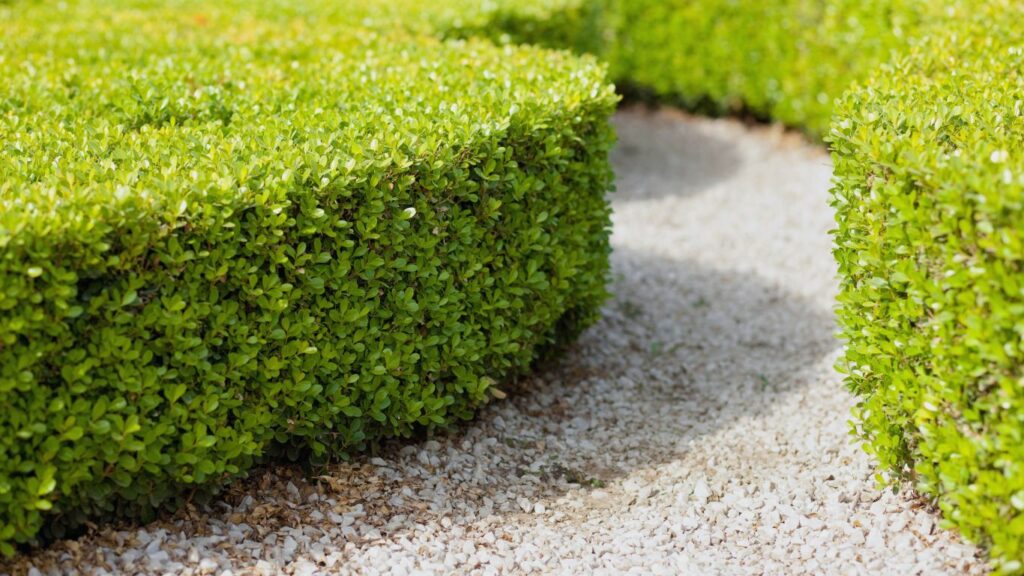
Boxwood is a classic hedge plant with small, glossy leaves and a compact growth habit. It is well-suited for formal gardens and topiary.
Advantages:
- Slow-growing and easy to shape, ideal for formal hedges.
- Tolerant of heavy pruning, allowing for intricate designs.
- Hardy and adaptable to various soil types and conditions.
Considerations:
- Requires regular maintenance to keep its shape.
- Susceptible to root rot in poorly drained soils.
4. Photinia (Photinia x fraseri)
Characteristics:
Photinia is known for its vibrant red new growth, which contrasts beautifully with its dark green mature leaves. It is a fast-growing hedge plant.
Advantages:
- Striking red foliage adds a splash of colour to the garden.
- Fast-growing, providing quick privacy.
- Tolerant of a range of soil types and conditions.
Considerations:
- Requires regular pruning to maintain its shape and promote red new growth.
- Can be prone to fungal diseases in humid conditions.
5. Pittosporum (Pittosporum tenuifolium)
Characteristics:
Pittosporum is a versatile hedge plant with small, shiny leaves and a dense growth habit. It produces small, fragrant flowers.
Advantages:
- Excellent for medium to tall hedges, providing good privacy.
- Attractive foliage and fragrant flowers.
- Tolerant of coastal conditions, making it ideal for the Mid North Coast.
Considerations:
- Requires regular pruning to maintain density.
- Can be susceptible to scale insects.
6. Grevillea (Grevillea robusta)
Characteristics:
Also known as the Silky Oak, Grevillea is a native Australian plant that can be used for informal hedges. It has fern-like leaves and produces striking orange flowers.
Advantages:
- Attractive foliage and stunning flowers attract birds and wildlife.
- Tolerant of dry conditions once established.
- Can be used as a windbreak or screen.
Considerations:
- Requires space to grow, as it can become large.
- Pruning is necessary to maintain a hedge-like shape.
Final Thoughts
Choosing the right hedge for your garden on the Mid North Coast of Australia depends on your specific needs and preferences. Whether you desire a formal, neatly trimmed hedge or a more natural, informal screen, there are plenty of options to suit your garden’s style and requirements.
Lilly Pilly and Photinia are excellent for fast-growing privacy hedges with attractive foliage, while Boxwood is perfect for those who prefer a classic, formal look. Murraya offers fragrant blooms and dense growth, while Pittosporum and Grevillea provide versatile and hardy options that thrive in coastal conditions.
By selecting the right hedge plants, you can enhance the beauty, privacy, and functionality of your garden, creating a green oasis that complements your outdoor living space. For tailored advice and professional installation, consider consulting with a local landscape gardener who can help you choose and maintain the perfect hedges for your property.